WEIRDLAND

Ad Sense

Monday, July 11, 2022

Meant to Be (2022) by Emily Giffin

Meant to Be by Emily Giffin will suck you right in. When Joe Kingsley, the son of an iconic American family, meets model Cate Cooper on a photo shoot in the Hamptons, it’s love at first sight. But Cate comes from the wrong side of the tracks and isn’t interested in becoming front-page news by dating Joe. Eventually, she gives in, and the two fall in love, but secrets from Cate’s past and a tragedy threaten to destroy their relationship. Out of the gate, you are charmed by Joseph "Joe" Kingsley, Jr., a lovable bachelor with a heap of expectations on his shoulders due to his family's name and prestige. The chapters alternate between Joe's perspective and of his romantic interest, Cate Cooper, a thoughtful, strong and effortlessly elegant model-turned-stylist. It's no secret that Giffin's novel was inspired by JFK, Jr.'s and Carolyn Bessette's love story; however, Giffin's creativity and insights take her characters to a new level. You will be left with insights on how two people from very different worlds can navigate differences, and how sometimes a couple's love story really is meant to be.

Inspired loosely by John F. Kennedy and Carolyn Bessette's ill-fated romance and set in '90s New York City, Meant to Be follows cool, blonde, model-turned-fashion stylist Cate Cooper and hunky Joe Kingsley, scion of the Kingsley family, and as close to American royalty as you can get. The pair have a glamorous, passionate romance, tailed by the ever-present paparazzi. (It sounds familiar?) Giffin spoke to EW about Meant to Be, modern icons, and how the '90s "feels like the last decade of innocence." Source: ew.com

"On the weekends, I would stay in my room with Pepper, listening to music, reading Judy Blume novels about other miserable kids, and flipping through my Bop and Tiger Beat magazines. I didn’t like boys in real life, but I had a robust lineup of celebrity crushes that included Shaun Cassidy, Leif Garrett, and Donny Osmond. My hands-down favorite, though, was Joe Kingsley. Growing up, I’d always known who Joe was. A few years older than I was, he had a famous father who was killed in a failed space mission, and he lived on Fifth Avenue with his glamorous mother. [...] Joe laughed, his face lighting up, then looked directly into my eyes. I held his gaze, feeling a little light-headed. I’d met celebrities before, but no one near this famous—or handsome. Overwhelmed, I had to glance away for a second. When I looked back his way, he was still staring at me. “I’m Joe, by the way,” he said, extending his arm. I gave him a half smile, then shook his hand. “I’m Cate Cooper.” Joe looked smug as he gave me a wink. “Yep. I knew it. I never forget a face. Not one as pretty as yours, anyway.” It was the kind of line that usually sounded cheesy, but Joe’s delivery was so sincere that it disarmed me, and I could feel my heart flutter a little as I thanked him." —Meant to Be (2022) by Emily Giffin

Tuesday, June 28, 2022

The Biology of Desire, Ozark: USA's Identity

Experts estimate that one in 10 Americans is dependent on alcohol and other drugs, and  behaviors like gambling, overeating and playing video games can be addictive in similar ways, Once, addictions were viewed as failures of character and morals, and society responded to drunks and junkies with shaming, scolding and calls for more “will power.” This proved spectacularly ineffective, although, truth be told, many addicts do quit without any form of medical treatment. Nevertheless, many do not, and in the mid-20th century, the recovery movement, centered around the 12-Step method developed by Alcoholics Anonymous, became a godsend. Marc Lewis, a neuroscientist and psychologist, is the author of a new book: “The Biology of Desire: Why Addiction is Not a Disease.” Lewis’s argument is actually fairly simple: The disease theory, and the science sometimes used to support it, fail to take into account the plasticity of the human brain. Of course, “the brain changes with addiction,” he writes. “But the way it changes has to do with learning and development—not disease.” All significant and repeated experiences change the brain; adaptability and habit are the brain’s secret weapons. The dangerous changes wrought by addiction are not, however, permanent. Each of these people, Lewis argues, had a particular “emotional wound” the substance helped them handle, but once they started using it, the habit itself eventually became self-perpetuating and in most cases ultimately served to deepen their wounds. Over time, people who are addicted become trapped in the moment-to-moment experiences and disconnected from their past and future. Source: www.salon.com

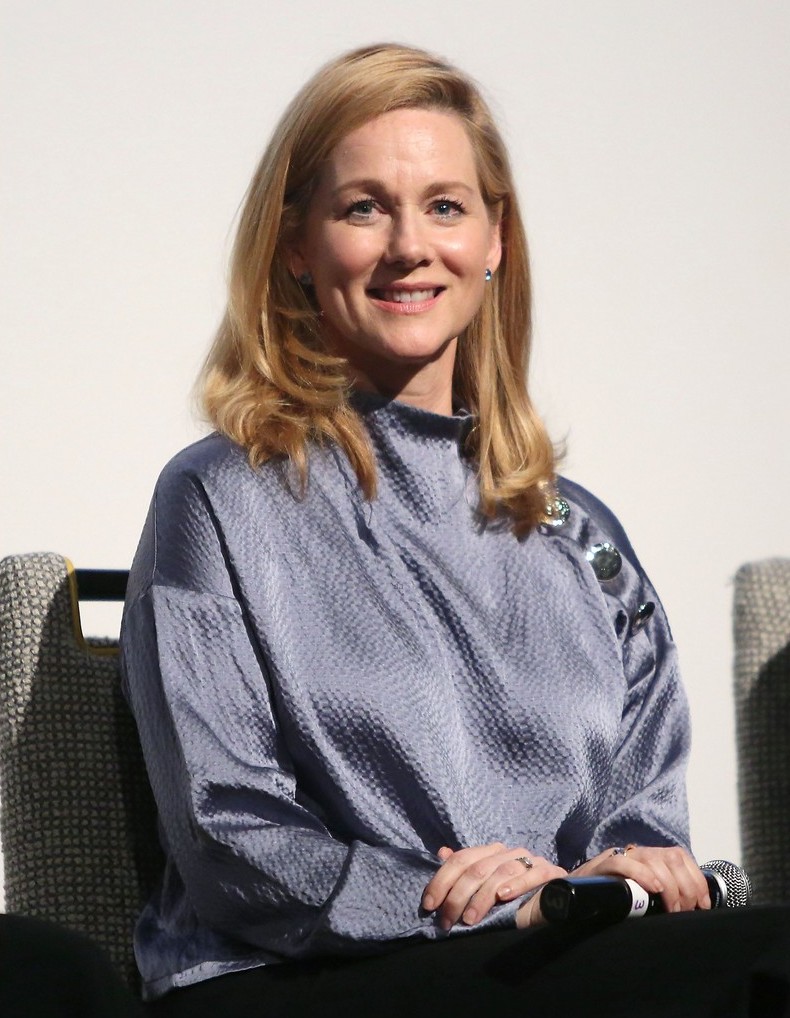
Throughout her body of work, Laura Linney exudes a quality at once familiar and slightly hard to place, with a dimpled smile that can slide easily from delight to menace and a contralto voice that can be adjusted to the scale of the medium. Still, when it comes to why she became an actor, she has no answer. “I don’t know if I really want to know,” she says. “Maybe when I’m 80 I’ll look at it. Why I decided on acting? For me, it’s always been about a connection that I don’t find anywhere else, possibly.” About the good appraisal Ozark has received, Linney remarks: “It’s a miracle when anything works. There’s a difference between successful and good. Something can be great and nobody sees it.” By the end of the third season, Wendy gives up her older brother Ben to the Navarro Cartel. Although this was done to protect her family, Wendy proves herself to be the ultimate anti-hero of the show. Yet, she is still someone the audience wants to root for.

"I’m having real withdrawal from Ozark. Everything about it worked. All the right people were in the right positions. Everyone had a similar viewpoint. Everyone had a similar work ethic. I loved being in Atlanta. It was an unbelievable crew. Crews on television normally do not stay intact. Ninety percent of our crew stayed the entire time. What that does on a set, the safety that you feel, the unspoken communication, the ease, the comfort, and the fun that you have — I feel like I just landed in a pot of honey. I miss it a lot. Ultimately, Ozark was about our identity. Who are we? Who are you? Who am I? Who are we as communities? Who are we as a country? Identity."

Why does Ozark’s Jason Bateman think audiences responded so positively to the dark drama? Bateman has his thoughts on why the show has struck a chord: "It’s great that Ozark it’s not black and white. That it’s not good vs. evil or villain vs. hero. That’s the satisfying takeaway from our show, and that’s what gives you the anxiety, that there’s a level of tangible and relatable conflict and confusion. You recognize that you might be saddled with the same type of push-pull based on mistakes. There’s not a ton of explosions and effects and overt violence in the show. Hopefully, what is unsettling about it is that it’s humanity pushed right to the edge of what you’re capable of justifying." Source: cinemablend.com

Saturday, June 25, 2022

Roe vs Wade overturned, Juno's commentary

House Speaker Nancy Pelosi called the ruling of Roe v. Wade "such an insult, a slap in the face to women." "There's no point in saying good morning, because it certainly is not one," she said. "This morning the radical Supreme Court is eviscerating women's rights and endangering their health and safety. Today the Republican-controlled courts achieve their extreme goal of repealing a woman's right to make their own health decisions." Former President Barack Obama criticized the decision, saying the high court not only reversed nearly 50 years of precedent but it "relegated the most intensely personal decision someone can make to the whims of politicians and ideologues -- attacking the essential freedoms of millions of Americans." Hillary Clinton wrote: "Today's Supreme Court opinion will live in infamy as a step backward for women's rights and human rights." Source: cnbc.com

The writer of the film Juno has referred to abortion state bans as a “hellish alternate reality”, adding that she wouldn’t write the same movie nowadays. 
“I don’t even know if I would have written a movie like Juno if I had known that the world was going to spiral into this hellish alternate reality that we now seem to be stuck in, it sucks so fucking bad,” Diablo Cody shared. During their first meeting, Juno and Mark Loring strike up an instant connection and friendship that builds throughout the film. Mark (Jason Bateman) is a grown-up version of Juno. Just like her, he's into all that counter culture stuff, and he's taken on an ironic detachment, just like Juno. It doesn't help Juno makes some barbed comments to Mark such as "What would The Melvins think? You are quite the sellout!" 

Mark’s outfits throughout the film change according to where he is, mentally, in his marriage. His respetable clothes at the beginning of the film seem to be picked out by Vanessa, who favors a classical style. As the story progresses, Mark begins to dress in a more comfortable manner, opting for flannels and jeans before completely turning the page with a Soundgarden t-shirt layered over a long-sleeved shirt and a color scheme that complements Juno’s wardrobe. It can be said that Mark undergoes a negative character development, his underlying resentment towards Vanessa ruining his friendship with Juno at the end. So why is it until Juno comes into the picture that Mark finally chooses to break his silence? Back in the audio commentary of the film, Reitman and Cody comment that despite Mark and Juno having feelings for each other, Juno is in love with the idea of being an adult while Mark is in love with the idea of being young. And it isn’t until Mark reveals he’s leaving Vanessa that their worldviews clash and these feelings projected onto each other are unable to find any solid basis or hold, and they crumble. Source: medium.com
 

Thursday, June 23, 2022

Stranger Things Part 2, Dark Triad

Netflix has released images from the final hours of Stranger Things, which drop July 1. Two episodes totaling nearly four hours make up Volume 2 of the drama’s fourth on the streamer. Episode 408 will clock in at 1 hour, 25 minutes, while 409 will run 2 hours, 20 minutes. Last week, Netflix released a teaser for the final s4 hours of the drama created by The Duffer Brothers. During Netflix’s Geeked Week, Ross Duffer said he and his brother can now put the young stars in a lot more danger. Season four, up until this point, has been markedly darker than several of the preceding seasons. While the show always had one foot in the macabre, season four has been even harsher on the harried Hawkinites. A lot of this horror can be attributed to this season's newly introduced enemy, the villainous Vecna.

A trait consistently found to have a negative correlation with enjoyment of watching a horror film is empathy (Tamborini et al, 1990; Johnston, 1995; Lynch & Martins, 2015). People who report through self questionnaire higher empathy tend to sympathize more with characters they see on screen who are in danger than people with lower empathy (Davis et al., 1987). Therefore, viewers who are very empathetic should have the most negative effects when watching horror movies and would be expected not to enjoy them. Consistent with this, a meta analysis of experiments using horror movies showed that empathetic concern was negatively correlated with enjoyment of frightening and violent media (Hoffner & Levine, 2005). These robust findings of high sensation seeking and low empathy predicting horror movie enjoyment have led to my hypothesis that scoring high on Dark Triad traits can also be used as a predictor for horror movie enjoyment. Low empathy and high sensation seeking are both tendencies found among the personality types of the Dark Triad. The Dark Triad was identified as such in 2002 by Paulhus and Williams as three personality variables that are distinct but have some overlap and are all considered anti-social. These three traits are psychopathy, Machiavellianism, and narcissism. While narcissism and psychopathy were both originally identified as clinical personality disorders and identified as such in the DSMIV, they also exist at the subclinical level. Psychopathy is usually considered the most dangerous of the Dark Triad traits (Rauthman, 2012) Psychopaths by definition have low empathy (Del Gaizo & Falkenbach, 2008; Mahmut, Homewood & Stevenson, 2008) and would therefore be less likely to empathize with victims in horror films. Psychopathy is of particular interest to the study of horror movies because of their noteworthy relationship with fear. Psychopaths are often characterized as having no fear (Hosker-Field, Gauthier & Book, 2016) Source: digitalcommons.bard.edu

Monday, June 20, 2022

Ana de Armas in "Blonde": Marilyn Monroe

As the 60th anniversary of Marilyn’s death approaches, she is once again in the headlines. All too often, however, the stories shed little light on the lady herself. In the Sunday Times, Rosamund Urwin explores what Marilyn means to us in 2022. “Few stars have cast such a long shadow. Andrew Wilson, a novelist and biographer whose next book is about the actress, said that this stems from her mystique, which allows fans to have their own view of who she was. Plain Norma Jeane Mortenson could go almost unnoticed, but then transformed into the movie goddess Monroe, the character she created, who was luminescent on screen. ‘She is so open for interpretation and reinterpretation — anyone can project anything they want onto Marilyn and get something back,’ Wilson said. ‘That’s the classic definition of a star.’ Wilson added that Monroe was ahead of her time, too. 

‘She was one of the first stars of the public era who examined herself — almost having therapy in the full view of the public eye — making her a very modern celebrity,’ he said. ‘She was always asking, “What does it mean to be Marilyn Monroe?” Long viewed as a victim, Monroe’s life is also being re-appraised in light of the MeToo movement, Wilson said. ‘There was always this argument about was Marilyn a victim or a manipulator?’ he said. ‘It would be easy to interpret her as a victim of Hollywood at its worst, but at the same time, she was very savvy when it comes to business… She is one of those stars who resists binary interpretation, because she’s not “either, or”: she contains multitudes.’ Amy Greene, the wife of the late photographer Milton Greene and a friend of the actress, has spent six decades trying to make the case that Monroe was not a passive person. ‘She was never a victim… never in a million years,’ she told Vanity Fair. Source: themarilynreport.com

 
Ana de Armas is set to play Marilyn Monroe in Blonde, the adaptation of Joyce Carol Oates’ 2000 book. Norma Jeane Baker was Monroe’s real name purposefully misspelled by Oates with an extra “e” at the end of Jean. Director Dominik selected de Armas after almost a decade of trying to cast the lead role. Jessica Chastain and Naomi Watts had reportedly been attached to the film, which was in development since 2010. De Armas snagged the role in 2019. Oates first conceived of the novel after seeing a photograph of Norma Jean Baker winning a beauty contest in California in 1941. Director Dominik knew that Cuban actress de Armas was “the one” to play Monroe after just a single audition. De Armas gushed to Vanity Fair that the opportunity to take on the legendary star is a career-making task.

“I knew I could do it. Playing Marilyn was groundbreaking, a Cuban playing Marilyn Monroe,” de Armas said in 2020. “I wanted it so badly. You see that famous photo of her and she is smiling in the moment, but that’s just a slice of what she was really going through at the time.” De Armas’ “Knives Out” co-star Jamie Lee Curtis, whose father Tony Curtis starred opposite Monroe in “Some Like It Hot,” praised de Armas’ portrayal, saying, “I dropped to the floor. I couldn’t believe it. Ana was completely gone. She was Marilyn.” De Armas revealed to Byrdie that she wore a bald cap to conceal her natural brunette shade while starring as the titular blonde bombshell. Dominik also called de Armas “fucking amazing” as Monroe, telling Screen Daily, “The one thing nobody’s going to complain about is Ana’s performance.” Dominik told Collider that he thinks “Blonde” will be “one of the 10 best movies ever made” since it’s about the human condition. “It tells the story of how a childhood trauma shapes an adult who’s split between a public and a private self. It’s basically the story of every human being, but it’s using a certain sense of association that we have with something very familiar, just through media exposure,” Dominik said. Blonde will be released on Netflix on September 23, 2022.  Source: indiewire.com

Arthur Miller reminisced about Marilyn in an interview to Vanity Fair in 1991: “She was a lost child; she was also a tough character. As it turned out, she was tougher on herself than anybody else. She killed herself, finally. That’s how tough she was. And then when we broke up, I was left with the taxes. On both our salaries. I was dead broke by the time we parted. My plays were bringing in enough for the bread and butter. But I had alimony to pay. And I had to pay taxes on the place in Roxbury. He looks somewhere into the middle distance. “So she came to New York to learn how to act. She felt she’d never acted. She got into the Actors Studio. I thought, I’m going to take this extraordinary child of nature and lead her to the light of day. And then I discovered you can’t play God.” Miller says, “I began to dream that with her I could do what seemed to me would be the most wonderful thing of all—have my work, and all that implied, and someone I just simply adored.”

“I thought I could solve it all with this marriage. I was very idealistic. And she was simply overwhelming. As I guess I was to her, for a while. She had so much promise. It seemed to me that she could be really a great kind of phenomenon. She could be a terrific artist; she was endlessly fascinating as a person; she was full of original observations. Crazy as a coot, but there wasn’t a conventional bone in her body. Her reaction when she was down was to lash out at foes imaginary and real. Her dependence on pills grew, as did her reliance on her Actors Studio gurus, Lee and Paula Strasberg. I saw the Strasbergs as poisonous and vacuous, almost instrumental in Marilyn’s dissolution. Because they helped to justify her worst self-defeating strategies. In order to continue to have power over her, they would justify anything. With a large dose of intellectualization. When, if they really had her welfare at heart, they’d have tried to draw her gently closer and closer to reality. And the reality was what she ultimately faced, which was a studio that fired her. Because she wouldn’t appear to make the film. 

Had it been an ordinary situation on The Misfits, she probably would’ve come close to being fired then. ‘Cause we were up there on this dry lake, with some pretty big stars, sitting around for days at a time waiting for her to appear. Marilyn always—as I learned later—she would exhaust areas of her life. Simply exhaust them. And I was one of them. Then she’d go on. It's hard reading about her because you never can really figure her out. I don't think she had an integrated personality or knew what she wanted. Well, the whole idea of a domestic existence. I mean, I couldn’t live for too long in a tent and on the road. I have to have a steady domicile, and some peace and quiet, or I can’t work. And she wanted that, too, with part of her psyche. But she also wanted something that made that very difficult to have. Which was this power. Star power. Because the opposite was to be destroyed.” Source: vanityfair.com