WEIRDLAND

Ad Sense

Friday, March 10, 2017

Private Worlds (Debunking Insanity Myths), Trippy make-out session with Jim Morrison

Private Worlds (1935) directed by Gregory La Cava (Happy Anniversary!): Claudette Colbert plays Dr. Jane Everest, a psychiatrist in charge of the male ward at The Brentwood clinic, a progressive mental hospital. Her partner is Dr. Alex MacGregor (Joel McCrea), with whom she has partnered for many years. Despite their professional relationship the pair are not involved romantically — MacGregor is already married to Sally (Joan Bennett), an innocent and trusting girl who adores Jane and trusts Alex — until he gives here reason not to, while Jane pines for a love lost during the first world war. Things begin to go awry when a new hospital superintendant is appointed: Dr. Monet (Charles Boyer) who arrives with his sister Claire (Helen Vinson) in tow and begins to shake things up at the hospital. Monet believes there is no place for a woman in the upper echelons of the medical profession, and banishes Jane to the outpatient clinic. 

Colbert’s Jane Everest is a surprisingly modern breath of fresh air: She’s intelligent, witty, professional, and most importantly, respected as a superior physician by all of her male counterparts —even Boyer’s Monet, in his own time. The film works hard to break various commonly held beliefs about mental institutions and the mentally ill, with entire scenes dedicated to debunking myths. In a key moment that really typifies the movie’s point of view, McCrea’s character says, “I find very little difference between sanity and insanity.” Gregory La Cava, who did most of his directorial work during the silent era (though he helmed such well remembered movies as My Man Godfrey and Stage Door, among others), does a fine job with this material. La Cava’s camera pans in both directions and zooms in and out on the leering faces of the disturbed patients, as the soundtrack becomes a cacophony of screams and cackles. Combined with the near pitch-black setting the scene takes on an expressionistic feel very much out of character with other domestic films of the time. Source: cin-earter.blogspot.com

"I decided it was time for me to take LSD and find out what was really going on. I looked in the mirror and saw my heart beating in my eyeballs, the galaxy throbbed through my quivering veins; I could see trees growing up my cheeks and animals being born in distant dimensions. Ghostlike souls endlessly circled inside my bulging brain, and I was one with them all. The Doors where playing the Hullabaloo Club at Sunset and Vine and I made sure to have a bottle of Trimar for the event. I desperately hoped that Jim would arrive, scoop me up, take me backstage and kiss my lips off. And that's exactly what happened. I had a couple of hankies in my bag, and during our make-out session we indulged wildly in the mind-damaging drug. I had never kissed anyone while high before and it was a revelation! I melted in his mouth like honey, my whole body became a sticky liquid, and his fingers on my face pushed holes through my cheeks like they were on fire and left gaping holes where honey gushed out. He took me by the hand and we climbed a rickety ladder up to a dingy, dark loft where a bunch of old lighting equipment was rusting away, and taking my muskrat jacket, he laid it out on the wooden planks like a damsel in distress."

"What a face he had! One of God's greatest gifts to rock and roll was that guy's face. And there he was right above me, his lips parted and his eyes closed, going in and out of focus as I inhaled my hanky. He drove my Oldsmobile all around Hollywood and I sat next to him, his ring around my neck, and we talked about Trimar. He said it might be 'hurting our heads' and gave me a lecture on drug abuse, telling me the persona he put forward was an elaborate act, and he really wanted to be noticed as a poet. On our way to Tiny Naylor's on La Brea, he grabbed the bottle of Trimar, and threw it out the window into a yard full of overgrown ivy: 'Now we won't be tempted.' We had date-nut bread and fresh orange juice while the sun came up, then cruised the silent Strip to a little hotel where he was staying during his feud with Pamela. After some heavy necking, he climbed from behind the wheel and said, 'I really want to see you again, darling, come here and see me or call anytime.' That was the only time I had my hands on Jim Morrison; I never went all the way with him. He turned out to be very much a one-woman man. As far as I know, he spent the rest of his life with Pamela, and the relationship was of the stormy nature, but I guess he loved her madly. I didn't dare return to the green house after she ordered me out. Jim Morrison prodded and provoked, tested everyone around him to see if he could get an honest reaction. The last time I saw him was right before he left for Paris. I was walking down La Cienega. Jim was on the other side of the street, driving a big convertible, and he turned left into the Benihana parking lot, stopping me dead in my tracks. He told me how nice it was to see me again and how pretty I looked. He took my hand and kissed it; then he backed into the honking traffic and careened down the street." —"I'm with the Band: Confessions of a Groupie" (2005) by Pamela Des Barres

Wednesday, March 08, 2017

Jim Morrison, Lou Reed, Their Rock Wives

Apparently Jim Morrison and Pamela Courson encountered each other at a midweek party at UCLA. She was radiant, laughing, and seemingly with another guy. Jim circled around her, looking for an angle, but Pam wouldn’t make eye contact. According to Jim’s friend January Jansen, “He saw her there across the room and wanted to meet her, so he asked around until he found a friend of hers who could arrange a proper introduction.” They chatted for a while, and she told him she was taking art classes at Los Angeles Community College. The following weekend, in early April 1966, Pam Courson came to the London Fog. While John Densmore and Pamela were talking in one of the Fog’s booths, Jim Morrison made his move and sat down with them. Ray Manzarek tried to accurately describe this encounter: “Once their eyes combined, their psyches did a caduceus up the staff of Mercury and their souls sprouted wings. They were mated. Olympian. Cosmic.” Jim Morrison later told that when Pamela finally took him home at dawn, it was the first time he’d ever really made love. A few nights later, they went on their first date, to see French director Claude Lelouch’s hit film A Man and a Woman. Pamela had an electric, star-quality presence that could kill all conversation when she walked into a room. She hated the Doors, thought the whole thing was way beneath Jim's talents. Jim didn’t argue with her, just reminded her that the Doors were paying the bills for her rent, the boutique, and everything else. Jim was crazy about Pamela, and so he pampered the hell out of her. She always gave him a lot of attention and admiration and he also showed a great deal of kindness and loving behavior toward her.—"Angels Dance and Angels Die: The Tragic Romance of Pamela and Jim Morrison" (2010) by Patricia Butler

Jim Morrison: “To me, politics is nothing more than the search of certain individuals for private power. They can cloak it in any ideological, romantic or philosophical terms they want, but it’s essentially a private search for power.” Wallace Fowlie, the distinguished biographer of Arthur Rimbaud, began teaching Jim Morrison’s poetry at Duke University. Similar courses were offered at Yale and Stanford. Fowlie later published a critical study, Rimbaud and Jim Morrison: The Rebel As Poet.


Jim Morrison & Pamela (People are Strange) video. Soundtrack: "People are Strange", "Love Her Madly", "The Crystal Ship", "Hello, I Love You" by The Doors, and "Oh, Jim" by Lou Reed.

I was at Lisa Robinson’s house when she got the call from Jim Morrison’s girlfriend Pamela, asking what she should do? Jim was dead in the bathtub. I didn’t want to lose Lou! His drinking scared me silly, but there was nothing I could do except monitor him as best I could. Lou’s favorite bar on Long Island was Jilly’s, where he had bartended on and off in the summers. The gays flirted with him, but there was nothing inappropriate or outrageous. Everyone knew that I was his girlfriend, and the boundaries were drawn. Lou’s flirting didn’t bother me. It didn’t mean anything to him and I felt secure in his love for me. Underneath all the posing, Lou was all man—a leader—and particularly courageous about his principles. He walked away from any situation if it meant he was not being true to himself. If he couldn’t follow his true course, he would give it all up—which was the main reason he left The Velvet Underground. He actually was crazy enough to follow his principles in the real world. At seventeen, Lou’s parents had sent him to see a psychiatrist who prescribed EST for his depression and mood swings. During the summer of 1959, he was treated at Creedmoor State Psychiatric Hospital in Queens, New York, where the EST treatments were administered without an anesthetic. At that time, the procedure involved putting him on a wooden gurney with a rubber block between his teeth. This was an experience that scarred Lou for life. It is commonly thought that EST was prescribed to Lou in order to cure him of his ‘bisexual tendencies,’ but he never told me this or even alluded to it. I think he told journalists this to be more sympathetic to the gay community, in part to broaden his appeal to that audience.

Lou was intent upon becoming successful as an original artist. He rarely talked about his personal writing process. Lou wrote under a kind of extreme cyclical personal pressure—in spurts, usually overnight, and after thoughts and feelings had built up in him so intensely that they came pouring out, often fully formed. His writing process was cathartic, and it allowed him to reach his most authentic truth. Lou never told me what to say, how to act, or what to wear. He always told me I looked great, whatever I wore. He had complete confidence and trust in me, and he let everyone around know it. David Bowie made it known that he was very interested in working with Lou, but the more Lou wished to impress someone, the less he acted like he cared.  —"Perfect Day: An Intimate Portrait Of Life With Lou Reed" (2016) by Bettye Kronstad

Lou Reed's Demos, Papers And Record Collection Soon To Be Public: Laurie Anderson, Lou Reed's widow, is donating his personal archive of recordings, photos and business records to the New York Public Library. Anderson says she hopes access to the archive will paint a more nuanced picture of Lou Reed than the tough guy in leather jacket and shades everyone knows. The collection includes thousands of hours of video and audio recordings and more than 300 boxes of papers, photos and other items spanning his six-decade career. There's a 1971 recording of Reed reading poetry. There's a bill from the legendary New York bar Max's Kansas City — "I really wanted it to not be deep in some vault where only people with white gloves can come. He was really democratic," Anderson explains. Source: www.npr.org

Thursday, March 02, 2017

Happy 75th Anniversary, Lou Reed!


Happy 75th Anniversary, Lou Reed!

Lou Reed would’ve turned 75 today (March 2), and in the pantheon of rock and roll, there’s no other figure that exuded the enigmatic cool of Reed. From the Velvet Underground to his solo work, he was the standard of that unique breed of the rock and roll poet that no one else has really surpassed. Reed is the perfect New York icon, which was echoed by Patti Smith when she inducted him into the Rock and Roll Hall of Fame in 2015. Smith opened her speech with the following: “On October 27th, 2013, I was at Rockaway Beach, and I got the message that Lou Reed had passed. It was a solitary moment. I was by myself, and I thought of him by the ocean, and I got on the subway back to New York City. It was a 55-minute ride, and in that 55 minutes, when I returned to New York City, it was as if the whole city had transformed. People were crying on the streets. I could hear Lou's voice coming from every cafĂ©. Everyone was playing his music. Everyone was walking around dumbfounded. Strangers came up to me and hugged me. The boy who made me coffee was crying. It was the whole city… I realized, at that moment, that I had forgotten, when I was on the subway, that he was not only my friend, he was the friend of New York City.” And he still is. Source: wror.com

Much like the Doors' frustrated poet and failed film student Jim Morrison, Reed, the lover of literature and rock 'n' roll, who was playing in bar bands doing top 40 hits at night and studying for his arts degree during the day (later taking a job writing knock-offs of radio hits for a New York publishing house), saw the Velvet Underground's purpose as being "to elevate the rock and roll song and take it where it hadn't been taken before." Source: www.smh.com.au

Wednesday, March 01, 2017

The Century of the Self, Rockin' the Free World


"The Century of the Self" documentary by Adam Curtis focuses on the work of Sigmund Freud and PR consultant Edward Bernays. In the late 60s and early 70s, thousands flocked to the Esalen Institute. From being obscure and fringe, it quickly became the centre of a national movement for personal transformation — they created the 'me' generation.

Adam Curtis: Werner Erhard was the ultimate relativist. Erhard thinks that defusing the notion that you have a true self is empowering. He thinks the self is endlessly fluid and can be reinterpreted again and again. But what I think he didn't realise was that, by doing that to people, he also liberated big business because it meant that business could say, "You can have any identity you want, be whatever you want to be, and we will sell you whatever you need to express your identity". So, ultimately, I think the joke is on him. What he was about was producing the most solipsistic, self-centred people you could possibly imagine. Really he was teaching people just to think in terms of their self — like, the world outside is not real — and telling them they could create their own reality by the strength of their own personality. It is extreme narcissism, but a very powerful idea that, arguably, led to the new self expressive consumerism which rose in the 80s and dominated life in the 90s. Erhard was one of those who encouraged the puffing up of that selfish aspect of human nature which is irrational and not very nice. The huge rise in depression and anxiety disorders in the last 50 years is linked to the rise of the self, a rise in the increasingly isolated self in society is a parallel with the rise in rates of anxiety and depression. Source: www.hgi.org.uk

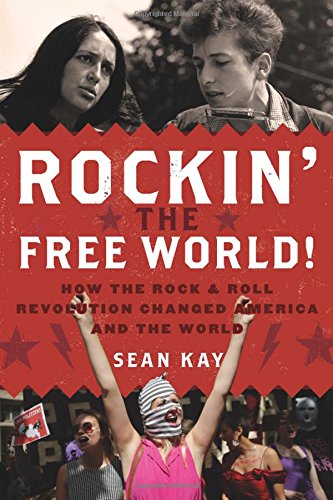
Sean Kay, “Rockin’ the free world! How the rock & roll revolution changed American and the world” (2017) book review: “Rock and roll,” Kay says, “is more than a music form—it is an idea, an attitude, a way of thinking about the world.” Rock music is more than pop music. If anything, pop music is rock and roll’s dull child. Rock and roll is the part of pop music that is original, alive and urgent. That feeling of freedom is what rock and roll reinvented in the 1950s. Indeed, a sense of joyous urgency: the reason jazz coalesced as a new music, the reason Dixieland developed into Big Band that developed into Be-bop. Kay’s book stresses the upside of rock and roll: “Rock and roll affirms and spreads freedom, equality, human rights, and peace advanced via education and activism.” Despite the overwhelming narcissism, disregard for others, the drugs and alcohol-fueled amorality, the enduring message of rock & roll is hope. “Hope. That’s a good message.” Source: www.huffingtonpost.com

Jim Morrison avidly read the popular sociologists of the day, with a special interest in crowd psychology as it related to drama and the theater. Two favorite works Morrison cited in his notebooks were David Riesman’s The Lonely Crowd, which explored problems confronting the individual and the threats to personal freedom imposed by mass culture, and Norman O. Brown’s Life Against Death, an influential 1959 bestseller that attempted to psychoanalyze human history. Morrison was deeply interested in Cold War–era issues of social control that also appealed to the entire science fiction movement and Beat writers. Elias Canetti’s Crowds and Power drew him in with its analysis of the performer/audience nexus, and taught him techniques he would deploy in a few years as frontman in The Doors. C. Wright Mills’s The Power Elite left little illusion about who was in charge of the American republic, and probably doubled Morrison’s deeply ingrained contempt for authority, especially the military.

Christopher Lasch’s ‘The Culture of Narcissism’ (Written about Baby Boomers, Perpetuated by Millennials): The Culture of Narcissism: American Life in an Age of Diminishing Expectations is a 1979 book by the cultural historian Christopher Lasch, in which he explores the roots and ramifications of the normalizing of pathological narcissism in 20th century American culture using psychological, cultural, artistic and historical synthesis. Lasch proposes that since World War II, post-war America has produced a personality-type consistent with clinical definitions of "pathological narcissism." This pathology is not akin to everyday narcissism, a hedonistic egoism, but with clinical diagnosis of narcissistic personality disorder. Lasch locates symptoms of this personality disorder in the radical political movements of the 1960s (such as the Weather Underground), as well as in the spiritual cults of the 1970s, from est to Rolfing. The sociologist Richard Sennett “reminds us that narcissism has more in common with self-hatred than with self-admiration,” writes Lasch.

Tuesday, February 28, 2017

Sun Records, Nostalgia Trip, Elvis & Jim Morrison

A new drama meanders through the nascent careers of Elvis Presley, Jerry Lee Lewis, Johnny Cash, and Ike Turner — starring Chad Michael Murray as legendary producer Sam Phillips. “Sun Records” is based, loosely, on the musical “Million Dollar Quartet,” which tells the story of the real-life, mostly impromptu jam session between Elvis Presley, Johnny Cash, Jerry Lee Lewis, and Carl Perkins at a Memphis joint named Sun Records. That little record label was owned by a small-time producer named Sam Phillips, who despite marginal financial success went on to be immortalized in the Rock and Roll Hall of Fame — for discovering Presley, working with artists like Cash, Lewis, and Roy Orbison, and for producing the Delta Cats’ “Rocket 88,” an Ike Turner song that is considered to be the first rock and roll record. Rock and roll history is dense, fertile territory for mythmaking and nostalgia, and Sun Records, the historic institution, is as good a peg as any. 


Colonel Tom Parker (Billy Gardell), the colorful figure who becomes Elvis’ manager, is instantly recognizable; and it’s hard not to fall for the baby heartthrobs as played by Drake Milligan and the other cast members: Kevin Fonteyne as soulful Johnny Cash, Christian Lees as lightning-in-a-bottle Jerry Lee Lewis. Margaret Anne Florence plays Marion Keisker, the radio personality and Sun Records office manager who discovered Elvis in 1953. She is the one who famously asked, “What kind of singer are you? Who do you sound like?” to which he responded, “I sing all kinds… I don’t sound like nobody.”

“Sun Records” seems like a sister production to 2008’s “Cadillac Records,” which similarly tells the story of a white producer curious about the commercial potential of the changing black music scene. “Sun Records” is a nostalgia trip, with occasional numbers to remind the audience the topic is in fact music. Milligan’s interpretation of young Elvis enjoyably apes the King, and Murray as the unstable Phillips is predictably charming. Source: variety.com

The combined efforts of Elvis Presley and Sam Phillips made the resources of the three main streams in popular music available to a host of new-coming rock and roll singers and musicians. Putting these elements together in the pressure cooker of extended sessions in the small Sun studio in Memphis led to a new rock and roll style known as rockabilly in which gospel, rhythm and blues, and country and western, particularly hillbilly music, were merged into a new kind of songs. The “Presley-Phillips” cooperation led to classic rock and roll records like “That’s All Right Mama” (1954) – Presley’s first record, “Good Rockin’ Tonight” (1954), “You’re A Heartbreaker” (1955), “Baby Let’s Play House” (1955), and the last record Presley made for Sun “Mystery Train” (1955). Phillips brought artists and performers like Carl Perkins, Roy Orbison, Johnny Cash, and Jerry Lee Lewis, to the front lines of the new musical stream. Alongside Sun and Specialty, four other independent record companies – Atlantic, King, Chess, and Imperial – were influential in shaping the new music. Atlantic was probably the best known independent company of the post-war era.

Elvis is shown mostly mooning over a girl and dealing with neighbors less color blind than he. Like every biopic ever, “Sun Records” is not perfect history. Sometimes it's a lazy mistake, as when Elvis says he read "a little" of "On the Road" years before it was published. At other times, it rewrites the record for the sake of making a scene: When Ike Turner (Kerry Holliday) brought his band to Phillips' studio to record, the speaker in the guitarist’s amplifier was indeed blown, but not because, as seen here, it was hit by a shotgun blast as Turner and his band drove away from a cafe where he’d grabbed the tip jar to pay for the session. Source: www.latimes.com

In a review for Creem magazine in 1979, Patti Smith praised Jim Morrison's An American Prayer: "Today the drama of his intensity seems dated. Dated in its passion and innocence, like West Side Story or The Grapes of Wrath. But he was always dated, at his most literal, even when he was around. Bigger than life and so he was laughable." Elvis, Intimate Family Memoir of Life With the King by Billy Stanley, reports a conversation with Elvis about Jim Morrison and The Doors in which Elvis said: “Jim Morrison had special abilities…. He was the new poet laureate… But he died before he could understand his power and what he could do with it. That’s a tragedy. So much unspoken. Just like James Dean.”

Jim Morrison couldn't exist in the modern world: He would do things to guarantee him trouble. He instinctively recoiled against authority but was smart enough to make his contempt dramatic, funny and challenging. When Morrison slipped away in a bathtub in Paris in July 1971, there was no Malibu rehab offering alternative salvation. He was buried without an autopsy — circumstances ripe for conspiracy and conjecture, so the Morrison myth metastasized. During the '90s, the zeitgeist shifted from sincere and psychedelic explorations of self to sardonic, detached cool. To a subculture embodied by the acerbic, flannel-shirted, slacker nonchalance of Pavement, the Doors seemed as played out as paisley. And while a thousand bands have artfully ripped off Pavement, everyone looks absurd imitating the Doors. They are the rock equivalent of "Don't try this at home." Idle at the intersection of La Cienega and Santa Monica today and you'll see everyone but Jim Morrison. The City of Night has become another gentrified crossroads offering "puppy presents" and frozen yogurt. The psychedelic era turned sepia — a final barbaric winter before everything got worse. Source: www.laweekly.com