WEIRDLAND

Ad Sense

Friday, November 11, 2016

R.I.P. Leonard Cohen (Parasite of Heaven)

Leonard Cohen, the hugely influential singer and songwriter whose work spanned nearly 50 years, died at the age of 82. Cohen was the dark eminence among a small pantheon of extremely influential singer-songwriters to emerge in the Sixties and early Seventies. Only Bob Dylan exerted a more profound influence upon his generation, and perhaps only Paul Simon and fellow Canadian Joni Mitchell equaled him as a song poet.

Cohen's haunting bass voice, nylon-stringed guitar patterns and Greek-chorus backing vocals shaped evocative songs that dealt with love and hate, sex and spirituality, war and peace, ecstasy and depression. He was also the rare artist of his generation to enjoy artistic success into his Eighties, releasing his final album, You Want It Darker, earlier this year. Cohen visited New York in 1966 to investigate the city's robust folk-rock scene. He met folk singer Judy Collins, who later that year included two of his songs, including the early hit "Suzanne," on her album In My Life. His New York milieu included Andy Warhol, the Velvet Underground, and, most importantly, the haunting German singer Nico, whose despondent delivery he may have emulated on his exquisite 1967 album Songs of Leonard Cohen.

Cohen's relationship with Suzanne Elrod during most of the Seventies resulted in two children, the photographer Lorca Cohen and Adam Cohen, who leads the group Low Millions. Cohen was well known for his wandering ways, and his most stable relationships were with backing singers Laura Branigan, Sharon Robinson, Anjani Thomas, and, most notably, Jennifer Warnes, who he wrote with and produced. After indulging in a variety of international styles on Recent Songs (1979), Cohen accorded Warnes full co-vocal credit on 1984's Various Positions.


Various Positions included "Hallelujah," a meditation on love, sex and music that would become Cohen's best-known composition thanks to Jeff Buckley's incandescent 1994 reinterpretation. Its greatness wasn't recognized by Cohen's label, however. By way of informing him that Columbia Records would not be releasing Various Positions, label head Walter Yetnikoff reportedly told Cohen, "Look, Leonard; we know you're great, but we don't know if you're any good." Cohen returned to the label in 1988 with I'm Your Man, an album of sly humor and social commentary that launched the synths-and-gravitas style he continued on The Future (1992).

The final act of Cohen's career began in 2005, when Lorca Cohen began to suspect her father's longtime manager, Kelley Lynch, of embezzling funds from his retirement account. In fact, Lynch had robbed Cohen of more than $5 million. To replenish the fund, Cohen undertook an epic world tour during which he would perform 387 shows from 2008 to 2013. He continued to record as well, releasing Old Ideas (2012) and Popular Problems, which hit U.S. shops a day after his eightieth birthday. When the Grand Tour ended in December 2013, Cohen largely vanished from the public eye.


In October 2016, he released You Want It Darker, produced by his son Adam. Severe back issues made it difficult for Cohen to leave his home, so Adam placed a microphone on his dining room table and recorded him on a laptop. The album was met with rave reviews, though a New Yorker article timed to its release revealed that he was in very poor health. "I am ready to die," he said. "I hope it's not too uncomfortable. That's about it for me." "I’ve always been into self-dramatization," Cohen said last month. "I intend to live forever.” Source: www.rollingstone.com


Perhaps his most memorable song from Canadian poet/songwriter & performer Leonard Cohen. Cohen specified, notably in a BBC interview, that the song was about encountering Suzanne Verdal, the then wife of sculptor Armand Vaillancourt, in a Montreal setting. Indeed, many lines describe different elements of the city, including its river (the Saint Lawrence) and a little chapel near the harbour, called Notre-Dame-de-Bon-Secours (literally Our Lady of Good Help), which sits on the side of the harbour that faces the rising sun in the morning, as it is described in the song.
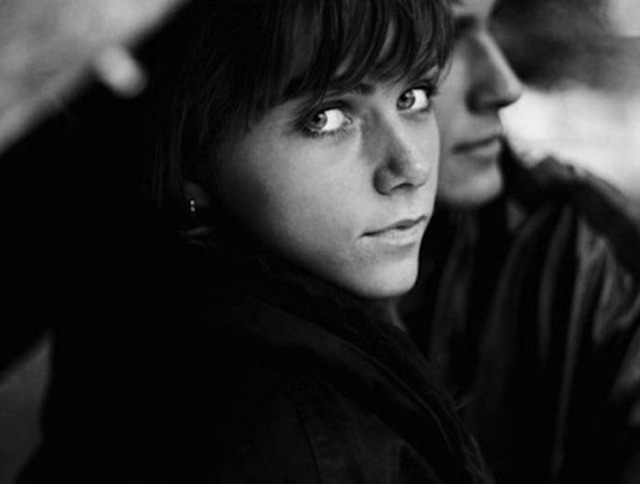
Suzanne Verdal was interviewed by CBC News's The National in 2006 about the song. Verdal claims that she and Cohen never had sexual relations, contrary to what some interpretations of the song suggest. Cohen himself stated in a 1994 BBC interview that he only imagined having sex with her, as there was neither the opportunity nor inclination to actually go through with it. In any case, its lyrics first appeared as the poem "Suzanne Takes You Down" in Cohen's 1966 book of poetry Parasites of Heaven (1966).

Tuesday, November 08, 2016

Gifted Guitarists: Buddy Holly, Roy Orbison, Lou Reed, Johnny Thunders

Not a one-hit or two-hit wonder, but a 27-hit wonder, all in about 18 months of worldwide fame, Buddy Holly's songs will live until there is no more music. Some artists shape their sound from what came before; others create new sounds. Buddy Holly did both. Prior to the release of “That’ll Be the Day” in May, 1957, there were very few recordings that managed to combine elements of country, pop, and rock ‘n’ roll. The sonic qualities of the record were friendly but different from anything heard on the radio. Perhaps they were different from anything ever played.  Source: musewire.com

ROY ORBISON
Band: the Traveling Wilburys
Iconic Guitar: Gibson ES-335
Classic Riff: “Oh, Pretty Woman”—The Essential Roy Orbison

Most people think of Roy Orbison as the super-smooth crooner who sang songs like “Crying,” “In Dreams” and “Only the Lonely.” But Orbison was also a wicked guitar player, who ripped out several impressive solos on early Sun Records singles like “Ooby Dooby.” In fact, Sun owner Sam Phillips was more impressed with Orbison’s guitar playing than his singing.

By 1964, most of Orbison’s early rock and roll contemporaries were either dead, strung-out on drugs, in jail or making crappy movies, but Orbison’s musical career still hadn’t reached its peak. In between the ballads, he recorded singles like “Mean Woman Blues” (check his wild guitar solo) and “Oh, Pretty Woman” that showed upstarts like the Beatles, the Animals and the Rolling Stones that Americans still could rock harder than any Brit.

LOU REED
Band: The Velvet Underground
Iconic Guitars: Gretsch Country Gentleman (Velvets), Schecter, Klein, Sadowsky and other customs
Coolest Riff: “Sweet Jane”—Loaded (The Velvet Underground)

Emerging in the mid Sixties at the helm of the Velvet Underground, he offered up a gritty black-and-white alternative to the rainbow-colored pyschedelia of the prevailing rock culture. He brought us along, albeit reluctantly, to meet junkies and hustlers. He was one of the first rock guitarists to embrace chaos truly and wholeheartedly. But the avant-garde din of Velvet Underground rave-ups seemed a genteel curtain raiser compared with the cacophony of Lou’s 1975 solo opus Metal Machine Music. The noise-guitar side of Lou’s legacy set the stage for cutting-edge genres like industrial, art damage, dream pop, grunge and present-day noise exponents.

But Lou’s edgy lyrical stance and image spawned something even more fundamental to deviant aesthetics: punk rock. He graced the first cover of Punk magazine in 1976 and was subsequently dubbed the Godfather of Punk. Lou embodied a new kind of rebel hero, an amalgam of two distinctly different but equally vilified social pariahs: the disaffected intellectual and the scumbag street hustler. In recent years, he added a third persona: the grumpy old man. Still, there can be no underestimating Lou’s immense contribution to rock or the fierceness of his commitment to obtaining guitar tones and lyrical images that cut like a knife and leave a permanent scar.

JOHNNY THUNDERS
Band: New York Dolls, the Heartbreakers, Gang War
Iconic Guitar: Gibson Les Paul Jr.
Coolest Riff: "Chinese Rocks" — Blank Generation: The New York Scene (1975-78)
Johnny Thunders’ snot-nosed New York take on Keith Richards’ cool is one of the pillars on which punk rock was built. An Italian-American guy (birth name John Anthony Genzale Jr.) from Queens, he was born a little too late to be part of the Sixties rock explosion. But the bands of that era were his influences, and he put his own spin on them in the early Seventies.

Thunders had the riffs to match the glam-trash group’s mascara. He took rock guitar and cooked it down to its essence, playing open chords and switchblade riffs that laid bare the amphetamine urgency behind the Dolls’ concise, catchy tunes. The Dolls had split up by the time punk rock got underway in New York and London, but their influence was profoundly felt on both shores. While Thunders shared Keith Richards’ appetite for excess, he sadly was not blessed with Keef’s monumental endurance. Thunders died in New Orleans in 1991 under mysterious, although most likely drug-related, circumstances. Source: www.guitarworld.com

Jonas Akerlund will direct the film adaptation of Nina Antonia’s seminal rock biography, “Johnny Thunders in Cold Blood,”  with production slated for early 2017. “Rock n’ Roll movies are always something of an awkward beast to nail. Do you get an insider or an outsider to direct? Finally we got both in Jonas Akerlund,” Antonia said.

Imagine, if you will, a band that wrote perfect rock n' roll songs, played them with furious abandon, and featured no fewer than two outrageous personalities whose charisma was only matched by their raw power, one of whom was one of the most gifted guitar players of the punk rock era. This band you're imagining is the New York Dolls. If you're not familiar with Johnny Thunders, the three essential albums are the first, self-titled New York Dolls album, L.A.M.F. (with The Heartbreakers), and his first solo album So Alone. Source: www.denofgeek.com

Sunday, November 06, 2016

Sam Phillips biopic with Leonardo DiCaprio, Buddy Holly's individualism

Leonardo DiCaprio is to produce and star in a film about Sam Phillips, the Memphis music producer famous for launching the careers of Elvis Presley, Ike Turner, Johnny Cash and Jerry Lee Lewis. Paramount Pictures has acquired rights to adapt Peter Guralnick’s book Sam Phillips: the Man Who Invented Rock’n’Roll, and has enlisted DiCaprio to co-develop it as a star vehicle for himself, according to Deadline. Mick Jagger will reportedly co-produce alongside DiCaprio. He last produced HBO’s rock series Vinyl that was canceled after one season. DiCaprio has yet to lock down a writer and director for the project.

Sam Phillips – who worked as a record executive, music producer and disc jockey – is credited for playing a vital role in the emergence of rock’n’roll in the 1950s, largely by discovering Elvis Presley. Source: www.theguardian.com

It wasn't Elvis who handed Sam Phillips his first real smash. Carl Perkins did that, with "Blue Suede Shoes," after Phillips, who perpetually needed money, sold Presley's contract to RCA. He demanded $40,000 for his star, which included $5000 in royalties Phillips owed Presley—more than a popular singer's contract had ever brought. After brokering the deal, Colonel Tom Parker, the wily manager who used the honorary title a Louisiana governor had conferred on him, made Elvis a commodity.

The welcome infusion of capital let Phillips crank up the volume for other Sun artists, who included Carl Perkins, Johnny Cash, and a brash, boundlessly energetic Louisiana boy initially billed as "Jerry Lee Lewis With His Pumping Piano." When Phillips first heard Lewis, "he practically jumped out of his skin."In 1969, Phillips sold his 80% interest in Sun Records, formally putting his glory days behind him.

Although Guralnick admits that his use of Invented in his book's title is an overstatement, he makes it clear that Sam Phillips exerted considerable influence on rock'n'roll, in recording sessions spurring and steering his seminal artists through take after take. If the artists thought some of the touches that made it onto their records were mistakes, Phillips deemed them "original." For him, that was the heart of the matter: "Most of all, individualism... individualism in the extreme," insists Guralnick. Source: www.stereophile.com

Read my previous post: Sam Phillips and Buddy Holly: The Men who invented Rock 'n' Roll.


By the end of the 1960s, except among older fans and hardcore oldies listeners, Buddy Holly was a largely forgotten figure in his own country. The tide began to turn at the very tail-end of the 1960s, with the beginning of the oldies boom. Holly's image constituted a haunting figure, frozen forever in poses from 1957 and 1958, bespectacled, wearing a jacket and smiling; Holly stood there seemingly eternally innocent, both personally and in terms of the times in which he'd lived. Until "American Pie," most Americans equated November 22, 1963, the day of President Kennedy's murder, with the loss of national innocence and an opening of an era of shared grief. Don McLean pushed the reference point back to February 3, 1959, and an astonishingly large number of listeners accepted it.

Buddy Holly is perhaps the most anomalous legend of '50s rock & roll. Among his rivals, Bill Haley was there first; Elvis Presley objectified the sexuality implicit in the music, selling hundreds of millions of records in the process, and defined one aspect of the youth and charisma needed for stardom; Chuck Berry defined the music's roots in blues along with some of the finer points of its sexuality; Jerry Lee Lewis, often known as The Killer, had been described as "the rock & roll's first great wild man." Holly's influence was just as far-reaching as these others, if far more subtle. In a career lasting from the spring of 1957 until the winter of 1958-1959, Buddy Holly became the single most influential creative force in early rock & roll. Source: www.mtv.com

Thursday, October 27, 2016

Oliver Stone's "Snowden" - Civil Disobedience

"The Masses have never thirsted after truth. They turn aside from evidence that is not to their taste, preferring to deify error, if error seduce them. Whoever can supply them with illusions is easily their master; whoever attempts to destroy their illusions is always their victim." —Gustave Le Bon, The Crowd: A Study of the Popular Mind 

ffa09e5c-ac63-4716-9198-9245192261ab
Snowden (2016)—based on The Snowden Files: The Inside Story of the World's Most Wanted Man (2014) by Luke Harding—marks Oliver Stone's return to his politically oriented films as Born on the Fourth of July (1989), JFK (1991) and Nixon (1995). Although not reaching his previous artistic heights, Stone's latest effort still compounds a very intriguing portrayal of NSA whistleblower Edward Snowden.


Mimicking the serious tone of Laura Poitras's groundbreaking documentary Citizenfour (2014), Stone gives us an uneasy ride through a vertiginous landscape of the Orwellian US Intelligence Community and the deep state bent on massive global surveillance. “In one month, NSA collected 3.1 billion calls and emails from inside the United States… and that’s a partial count, it doesn’t include any Telecom company data,“ confides Snowden at one point.

Snowden’s fictionalized NSA boss is named Corbin O’Brian (Rhys Ifans), after the antagonist in Orwell’s “1984,” a clear wink to the oppresive atmosphere permeating the sinister government facilities. “Most Americans don’t want freedom,” O’Brian assures Snowden: “They want security. People already catalog their lives for public consumption. Secrecy is security. And security is victory.”

1200
Joseph Gordon-Levitt impersonates the elusive Snowden in a tour-de-force performance, including his almost robotic speech pattern and mannerisms without ever betraying the humanity of his controversial subject. Stone found Gordon-­Levitt’s approach too “documentary-ish” at times and encouraged him to try “for the dramatic side as much as possible.” The charismatic actor (and creator of the interactive HitRecord community) renders an impressive psychological compositionavoiding blending in the shadow of Emmanuel Goldsteinprojecting an earnest personality that echoes Snowden's heroic temperament.


Snowden cites Henry David Thoreau as one of his influences. For Thoreau, as reflected in his essay "Civil Disobedience" (1849), the government is primarily an agent of corruption. “There will never be a really free and enlightened State until the State comes to recognize the individual as a higher and independent power,” argues Thoreau. So it's "not too soon for honest men to rebel and revolutionize."

Snowden contacted The Guardian journalist Glenn Greenwald with the intention of granting him exclusive access to thousands of leaked classified documents that would prove an indiscriminate use of the surveillance tools with obscure interests, contradicting Intelligence Director James Clapper's testimony before the Senate in 2013.

mv5bmtg2nde2mjy0ml5bml5banbnxkftztgwmzk1ntmwmdi-_v1_sy1000_cr0015001000_al_
Another important asset is Shailene Woodley playing Snowden's longtime girlfriend Lindsay Mills, lending emotional weight to their tumultuous relationship. Their playful banter and thorny arguments feel natural, forcing us to witness the devastating effects of Snowden's stressful schedule over their personal and sexual dynamics.

One of the most interesting segments is Snowden deceiving the security personnel after making a copy of extensive classified information of the NSA, abandoning Hawaii, and escaping as a fugitive accepting temporary asylum in Russia. The real Snowden briefly appears in the film, courtesy of his clandestine collaboration with Stone, warning us of the necessity of rebelling against “a turnkey tyranny.”

Although the film's pace is uneven, Stone manages to break the surreal 'time stands still' mood of the Mira Hotel sequences in Hong Kong, contrasting it with disparate scenarios, where Snowden not only fights his epileptic attacks, he also must pit his principles against his demons, his professional wows against his feelings. In a visual collage scene that suggests the patriotic sparks of Stone's brilliant JFK, Snowden admits to the audience and himself: “the truth sinks in no matter what justifications you’re selling yourself: this isn’t about terrorism, terrorism is the excuse, and the only thing you’re protecting is the supremacy of your government.”

Edward Snowden didn’t want to overthrow the system. “What I wanted to do was give society the information it needed to decide if it wanted to change the system,” he informed to The Nation: “I have a somewhat sneaky way of effecting political change. I don’t want to directly confront great powers, which we cannot defeat on their terms. We cannot be effective without a mass movement, and the American people today are too comfortable to adapt to a mass movement.”

“Power is in tearing human minds to pieces and putting them together again in new shapes of your own choosing.” ―George Orwell, 1984

Article published previously as Movie Review: Oliver Stone’s ‘Snowden’ on Blogcritics.

Friday, October 21, 2016

Nocturnal Animals (Amy Adams & Jake Gyllenhaal) Trailer, Modification of Memories

It’s quite the time to be alive for Amy Adams fans. On the heels of the final trailer for Denise Villeneuve’s “Arrival,” which has thrown Adams into the thick of the Best Actress Oscar race, a new trailer has debuted for “Nocturnal Animals.”


“Nocturnal Animals” is based on the 1993 Austin Wright novel “Tony and Susan.” The crime drama/melodrama hybrid divided critics at Venice and TIFF, though most agree the performances are stellar. 

Amy Adams plays a Los Angeles artist who’s unhappy with her job and marriage. She receives a manuscript from her ex-husband (Gyllenhaal), who she hasn’t seen in nearly 19 years, and begins devouring the text, which Ford brings to life in a duel storyline. The script details a shocking crime that happened to a family of three after they encountered a group of criminals while driving through the desert. Adams’ character takes the story as her ex-husband exacting revenge, but Ford has something much more dangerous up his sleeve.

The film also stars Isla Fisher, Armie Hammer, Laura Linney, Andrea Riseborough, Michael Sheen, and Jena Malone. Focus Features will release “Nocturnal Animals” in select theaters November 18. Source: www.indiewire.com

By framing a crime story within a domestic novel, Wright, an English professor and author of three previous novels, dissolves the fragile civility that often conceals violence. He also scrutinizes the institution of marriage, considers the nature of memory, and documents the potential impact of one's choices. At Edward Sheffield's request, Susan Morrow reads his first novel, Nocturnal Animals, in which an impulsive change of plan delivers Tony Hastings and his family into the hands of strangers who terrorize them. Passages from Sheffield's novel alternate between Susan's memories of Sheffield (her ex-husband), to details of her current marriage, to her speculations about the writer's and the reader's obligations. By counterpoising the eroding compromises of Susan's daily life with the sufferings of the Hastings family, Wright demonstrates that the refusal of individual responsibility infect both sexes and all classes. Highly recommended. -Library Journal, Jane S. Bakerman, Indiana State University.

Both true and false memories are associated with activity in the left posterior parahippocampal, bilateral retrosplenial, and bilateral posterior inferior parietal cortices, areas of the brain linked with memory retrieval. However, false memories were associated with equal amounts of activity in these brain regions when people looked at both the wrong and right photos; in contrast, true memories were associated with more activity in these brain regions. Moreover, compared with true memories, false memories involved greater activity in the ventromedial prefrontal cortex and hippocampus. Those brain regions are linked with flexible memory processes that allow for updating of existing memories with novel information, which unfortunately might involve false details.

“Our study provides evidence consistent with the general idea that some kinds of memory errors — in this case, falsely remembering that a ‘lure photo’ was encountered during the museum tour — can result from the operation of functional or adaptive memory processes that are otherwise beneficial,” St. Jacques says. “For example, if you couldn’t update your memory with new information you may have difficulty remembering where you parked your car today versus yesterday.” Future research can investigate what situations might support modification of memories. Source: blog.pnas.org