Buddy Holly "Because I Love You" video: soundtrack "I'm gonna love you too", "Love is Strange", "Dearest", "Because I Love You".
Buddy Holly was the first of the dead rock stars. Had it been Elvis Presley in that plane, the pop world would have been shaken to its core, but would it have been so surprised? Holly was almost the anti-Elvis. Holly had the demeanour of the boy next door, which is what made his death so truly shocking. There was no brooding foreboding in his music, which breathed with rhythmic zing, melodic air. He was innocence crushed, potential stamped out. Holly is such a compelling figure of tragedy because he embodies the terrible truth that death comes to everyone.
Holly was the first complete artist in the modern way. There is almost nothing to the lyric of Peggy Sue, yet his variations are like a comedic dare, constantly returning to the core phrase to invest it with another level of desire.
Bob Dylan was hugely inspired by Holly, catching a glimpse of his own possible future in this small-town geek. In American Pie, Don McLean characterised the plane crash as the day the music died, but really, it is what has kept the music alive. Eternally fixed in his first surge of creative brilliance, Buddy Holly raves on for ever. Source: www.telegraph.co.uk
Paul Westerberg & others remembering Buddy Holly: Seeds were sown in a frozen corn field in Iowa and reaped in Northern England. Buddy Holly was a crack-up, a rocker, a goof, an oddball Texan. He stood up to the industry during a time in which everyone else laid down. In the final moments of a 1957 interview, Buddy Holly responds: "I'd prefer singing somethin' a little more quieter anyhow." You can almost hear him smile as he says it. In the reserved tone of his answer, we hear this young man honestly and softly proclaiming what anyone can hear in the undying warmth of his recordings: Buddy Holly was meant to sing the true love song. You know, most of the rock 'n' roll that came out had that sort of Dionysian, sex-drugs-and-rock-and-roll image, or that tone that was about danger, and all that Buddy Holly stuff was way more about vulnerability. Because it wasn't music that was built on self destruction, it probably would've been quite limitless what he could've done. You didn't have to have a very high reading level to understand Buddy Holly's music. Yet, it was brilliant, and it evoked emotions. I think that's the best thing about any music: that it evokes emotion. Source: www.pastemagazine.com
As happens every year about this time, the fever’s spreading – the Winter Dance Party fever. Immediately on the heels of Monday night’s first-in-the-nation caucuses, Clear Lake will put on its finest as it welcomes people from around the world for a one-of-a-kind celebration of the early days of rock and roll. That includes commemorating the deaths of three blossoming personalities – Buddy Holly, Ritchie Valens and The Big Bopper – whose airplane crashed that fateful night near Clear Lake. Indeed, their memories and music will be a big part of the event that starts next Wednesday at the legendary Surf Ballroom. Source: globegazette.com
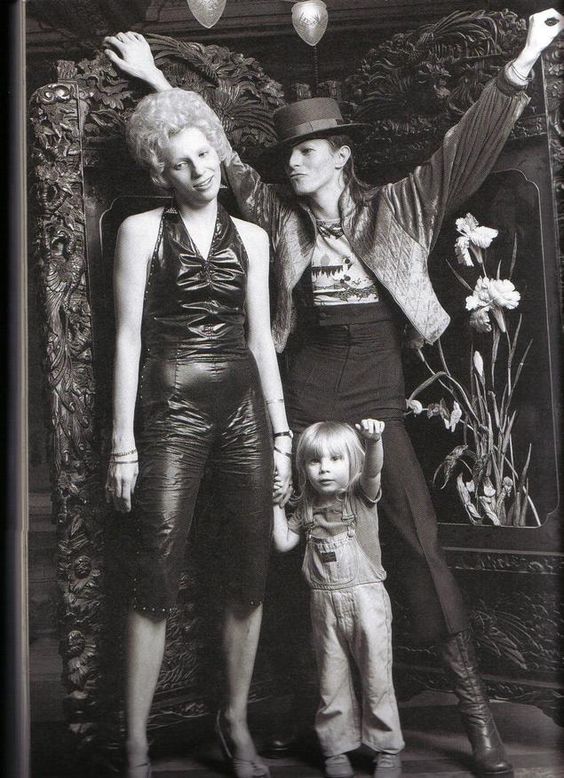
The former Mrs. Bowie says that she and David Bowie met through their mutual friend, record executive Dr. Calvin Mark Lee. In an interview with The Mirror, Angela Bowie actually recalls the first time she and Bowie slept together, when she was just a teenager:
"I remember exactly where and when David Bowie and I first slept together. It was in London in the summer of 1968 after an evening at the Speakeasy – the night King Crimson celebrated their new recording contract and Donovan got up and sang Buddy Holly songs with them. David came back to my little room above the Nomad Travel Club in Paddington. He was pretty drunk and we were both pretty exhausted when we fell into my little bed together." Source: heavy.com
BUDDY HOLLY: BABY I DON'T CARE / IT'S NOT MY FAULT (refurbished sound).
-Carl Bunch (drummer of Buddy Holly's band during the Winter Dance Party Tour in 1959): You can't really understand how bad the circumstances were under which we lived. We had broken down bus, after broken down bus, often without heaters, to be confined in for what seemed like forever between gigs. There were no superhighways back then. It was rare to get to stay in a hotel; at least it felt rare. I spent most of my time with Ritchie Valens. He knew I was more than just a little impressed with him as a performer. Ritchie talked about Donna a lot and got ribbed quite a bit about not going with the groupie girls after the gig. Ritchie, Bopper, and Buddy were all one-woman men. No matter what the temptation, they went to their rooms, when we had one, and not to the parties. We opened the tour at George Devine’s Ballroom in Milwaukee on the 23rd of January. I remember very clearly Buddy asking just as we pulled up, "What time is this eight o'clock gig going to get started?" At George Devine’s Ballroom in Milwaukee we were over an hour late due to problems with the bus and the weather. We had to set up on stage in front of an angry crowd and we ended up starting about two hours after we were supposed to. I was an absolute nervous wreck. Buddy kept talking to me backstage, telling me I'd be just fine. He said, "You're one of the Crickets now."
Dion came out and did his latest hits, "Teenager In Love," "Runaround Sue," and the rest. The audience loved him. The Big Bopper absolutely sent the crowd into a frenzy with “Chantilly Lace.” Ritchie’s “La Bamba” had just hit number one on the charts and he whipped them into a frenzy on top of a frenzy with his performance. But when Buddy came out, it was almost like God had walked out on the stage. Buddy was a Christian and an honest man.
-Lance Monthly: In one of the Buddy Holly biographies it was theorized that Buddy fathered a child out of wedlock, which has prompted a lot of talk and speculation. Do you have any information?
-Carl Bunch: I've never before heard a single word about it and I don't believe it. It's totally out of character for Buddy to have been sexually involved with anyone but Maria Elena. That's one of the things that stood out so much to me on the tour. Buddy could have had any of hundreds of beautiful girls or women, but chose not to cheat on his wife, period. I can't imagine why anyone would spread such a vicious rumor about such a nice guy. Buddy was a Christian. He did not believe in adultery. Source: www.musicdish.com and musicdish.com/mag
Friday, January 30, 1959: About thirty miles west of Davenport, the Winter Dance Party bus stopped providing heat altogether. All nine heaters on the converted school bus had frozen. It would take several hours for them to thaw and be cleaned out. As mechanic Martin Young began defrosting the heaters, the singers scattered throughout the eastern Iowa town of about 2,100. Buddy Holly and several others remained in the Gaul Motor Co.'s showroom, many sitting on a bench near some new 1959 Edsels. Holly pulled a bucket-type tractor seat from a display and plopped down on it. “I’m a reindeer salesman,” he quipped to the amusement of his friends.
Ritchie Valens led another group across the alley to the tiny Meet and Eat Cafe, where Esther Wenck and Betty Murray were serving up hamburgers and hot beef sandwiches to a packed lunchtime crowd. Even though the cafe had just a handful of tables and a few seats at the counter, a jukebox was squeezed in against one wall. Valens stood at the jukebox and asked waitress Wenck: “Would you like to hear the song I made famous?” Says Wenck: “I thought he was kidding. I said yes.” Several Tipton residents then were treated to an impromptu performance as Valens sang along to “Donna.” “I still thought he was goofin’,” Wenck notes. “I still didn’t think it was him.”
The bus was late arriving in Fort Dodge. “We were worried,” says Dick Derrig, an assistant manager at the Laramar Ballroom. Eddie Simpson, a fan who attended the Laramar concert: “I can remember when they announced Buddy Holly and he stepped out on the stage. He had been standing back in the backdrop and everybody went nuts when he started singing.” Simpson and two friends stopped to use the basement restroom when they spotted the singers sitting in a booth: “They were stars, but they were as common as could be. They just sat and talked to us.” Holly called his pregnant wife in New York. “Buddy would call from the tour and say how unhappy he was,” Maria Elena later told the Chicago Tribune: “I’d say, ‘Why don’t you come home?’ He’d say, ‘you know me. I have to finish.’ Besides, we needed the money.” Bill McCollough, a local disc jockey at KWMT who was to emcee the Laramar show started a conversation with Holly: “He was complaining about the bus, he was going to catch his death of cold. I had been taking some flying lessons.” “Could you call somebody and get us a plane?” Holly asked. —"The Day the Music Died: The Last Tour of Buddy Holly, the Big Bopper, and Ritchie Valens" (1997) by Larry Lehmer
The 3rd of February will mark the 57th anniversary of “The Day the Music Died”, again mourning the loss of Buddy Holly, Ritchie Valens and The Big Bopper, whose Beechcraft Bonanza plane crashed the night of February 3, 1959 in Clear Lake, Iowa. Hardly a consolation is Greek dramatist Menander’s claim: “Whom the gods love dies young.” However, we can commemorate their music and find a kind of solace by revisiting these three beloved characters — and many more from the rock and roll’s old guard — reading The Winter Dance Party Murders, a novel by Greg Herriges. As he is a great admirer of J.D. Salinger, it was a fortuitous meeting with the author of The Catcher in the Rye that inspired Herriges to write professionally.
The anti-hero of The Winter Dance Party Murders is Rudy Keen, an up-and-coming songwriter who bonds with Buddy Holly during the Midwest Dance Festival. Keen ends up becoming a target — alongside other 1950s icons like Eddie Cochran, Gene Vincent and Sam Cooke — of a grand-scale conspiracy created by the record company’s honchos. The central plot, though, revolves around the compromises and disappointments faced by Keen’s new friends, the dangers of commercialism discouraging the artist’s individual creativity, and a final reconciliation with Buddy Holly’s tragic demise and his immortal memory.
Herriges adds a zany sense of ‘ex-ante’ narrative mixed with a decidedly outré sense of humor, making up a lot of disconcerting theories and inside jokes throughout his story. For example, in chapter six, “Buddy In The Sky With No Glasses,” Buddy Holly protests he’s geeky looking. Rudy protests he’s geekier than Buddy: “I swallowed hard, tried to look as convincing as I could, and told him he wasn’t geeky.” Buddy: “You call this handsome?” Rudy: “Well—in a way. In a very peculiar way. Almost.” Buddy: “Dion. He’s handsome, the girls love him, his records sell. I’m geeky.” Rudy: “Stop saying that. You’ve got something else going, that’s all.”
There are also acute sentimental moments, as reflects a disillusioned Buddy Holly in the chapter 13 “True Love Ways”, when Rudy’s hero reneges on his commitment to rock ‘n’ roll. Buddy: “That’s just vinyl spinnin’ under a needle.” Rudy: “That’s all any of us ever were. That’s all we still are. We’re the music, Buddy, and the music lasts forever.”
Why is Buddy Holly still so popular five decades after his death? Why has his story perdured? As Joe B. Mauldin, from Holly’s band The Crickets said: “Buddy’s music was always sincere. He always tried to make everybody he saw or met happy.” Jerry Ivan Allison (The Crickets drummer) agrees: “He was more intelligent, talented and ambitious than most people who have picked up a guitar.” As John Gribbin summed it up in his book Not Fade Away: The Life and Music of Buddy Holly, “the simple answer is because he was the best.” Article first published as Book Review: ‘The Winter Dance Party Murders’ by Greg Herriges on Blogcritics.
Rock Around with Buddy Holly video. Soundtrack: "Oh, boy!", "Rock Around with Ollie Vee", "Ting-A-Ling", and "Crying, Waiting, Hoping" by Buddy Holly.
Buddy Holly’s Recording Debut: Today in 1956, Buddy Holly's first recording session for Decca Records took place in Nashville. After playing gigs the previous year, including one opening for the emerging Elvis Presley in Buddy’s home town of Lubbock, Texas before the bespectacled hopeful had even graduated from high school, Buddy landed a one-year record deal with Decca. Almost simultaneously, he also won a three-year publishing contract with Cedarwood.
So it was that on 26 January, 1956, Buddy and the Two Tones, also featuring Sonny Curtis and Don Guess, went into producer Owen Bradley’s Barn in Nashville to record their first tracks under the new Decca deal. The numbers they cut included 'Midnight Shift' and 'Don't Come Back Knockin'.' When Buddy’s contract arrived, his surname was misspelled without the “e,” but he decided to go with it, and he was Buddy Holly from that day on.
Live shows followed that year, as did two more Decca sessions, in July (where they recorded the first version of ‘That’ll Be The Day,’ among others) and November. But early in 1957 came the bombshell that Decca were not renewing their option, and that Buddy would be dropped at the end of the one-year term. Determined to make a go of his obvious talent, Holly went to record at Norman Petty’s studios in Clovis, New Mexico, where they cut what became the hit version of 'That’ll Be The Day.’ After some legal issues were resolved, and a name change to the Crickets was decided on, Decca subsidiary Coral bought Holly’s new masters, and he was all set to record and release the songs that would place him, and the Crickets, in rock ‘n’ roll legend. Source: www.udiscovermusic.com
Buddy Holly ("Maybe Baby"/"That's What They Say"/"Gone") video.
The Buddy Center Presents 'The Day the Music Died' on February 3: Wednesday, Feb. 3 will mark the 57th anniversary of the Feb. 3, 1959, death of legendary Lubbock-born recording artist Charles Hardin “Buddy” Holly in the crash of a private plane near Clear Lake, Iowa.
Also perishing that night: fellow pop stars J.P. “The Big Bopper” Richardson and Ritchie Valens, and pilot Roger Peterson. The Buddy Holly Center, 1801 Crickets Ave., offers free admission on Feb. 3 to the Buddy Holly Gallery from 10 a.m. to 5 p.m., and to the adjacent original home owned by the family of Crickets drummer J.I. Allison house from 10 a.m. to 4:30 p.m. Jacqueline A. Bober, Buddy Holly Center assistant manager and curator, will provide a guided tour, using a Citybus trolley, to “four significant Holly sites in Lubbock” at 11 a.m., 1:30 p.m. and 3 p.m. on Feb. 3. Sites being visited include: Lubbock High School, Fair Park Coliseum at the Panhandle-South Plains Fairgrounds, the KRFE (formerly KDAV) radio station and City of Lubbock Cemetery. Source: lubbockonline.com
The story of American popular music in the 1950s has about it the feel of absurdist fiction. Even the bare outline is strange to recount: how the nation drifted away from its love affair with the grand tradition of big band swing music and into a period of musical nihilism; how entrepreneurs with little experience of the music business and just as little capital competed effectively with large and powerful corporations. Before rock and roll was an idiom, it was a process of absorption, revision, and fusion of disparate influences. The new sounds pointed in no particular direction, yet, paradoxically, it was the era’s unfocused meandering that fueled its revolutionary thrust. Adding to the confusion, Billboard identified as “country artists” in the 1957's R&B charts: Elvis Presley (“Jailhouse Rock”), Buddy Holly (“Oh Boy”), Jerry Lee Lewis (“Great Balls of Fire”), Jimmie Rodgers (“Kisses Sweeter Than Wine”), Bill Justis (“Raunchy”), and Bobby Helms (“My Special Angel”). —Source: "I Don’t Sound Like Nobody: Remaking Music in 1950s America" (2012) by Albin J. Zak
Americans tend to think of the 1950s as an idyllic time when the babies were booming, the jobs were plentiful, and the country was flourishing. The average yearly income rose from $3,210 in 1950 to $5,010 in 1959, and post-war Americans were enjoying access to products and services that were scarce during World War II. Finding good uses for disposable income in the 1950s began the American love affair with consumerism. The median home price in the United States in 1950 was $7,354 (which is equivalent to $71,360 in today's dollars), rising to a median of $11,900 in 1960 ($93,830 in today's dollars), and housing represented about 22% of a 1950s household budget. For comparison, the median home price in October 2015 was $281,500, and the modern household spends about 43% of its budget on housing. While the specifics of what Americans bought in the 1950s might look different from modern purchases, the habits themselves were remarkably similar. That's because the spending habits we consider normal were born in the post-war 1950s. Source: www.wisebread.com